Molecular Formula:C15H24O
CAS No.: 115-71-9/77-42-9/98718-51-5/37172-32
Constitutional formula: E-α-santalol/E-β-santalol/Z-α-santalol/Z-β-santalol
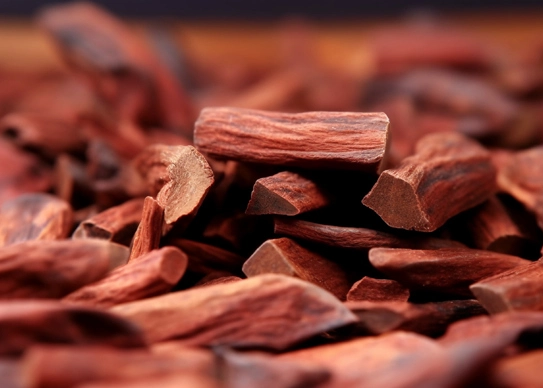
Santalol, a type of sesquiterpene, occurs in two enantiomeric forms, α santalol(also known as alpha santalol) and β santalol(also known as beta santalol), and was initially extracted from sandalwood essential oil. It serves as the primary fragrant component and active ingredient in sandalwood essential oil. α-Santalol mainly comes from Hawaiian sandalwood, Pacific sandalwood, and Australian white sandalwood, providing a refreshing scent similar to cedarwood, making it suitable for mood stabilization and emotional balance. In contrast, β-Santalol, which is mostly obtained from Indian sandalwood, has a deep, strong fragrance akin to that of antique furniture, promoting tranquility when utilized as incense.
| Product Name | CAS Number | Molecular Formula | Purity | Application |
| Santalol | C15H24O | 115-71-9/ 77-42-9/ 98718-51-5/ 37172-32 | / | Flavors & Fragrances, Pharmaceutical Applications |
Distinctive Aroma
Santalol, a sesquiterpene compound, exists in two enantiomeric forms, α and β, originally isolated from sandalwood essential oil. It is the main aromatic substance and bioactive ingredient in sandalwood essential oil. α-Santalol predominantly originates from Hawaiian sandalwood, Pacific sandalwood, and Australian white sandalwood, offering a refreshing scent to cedarwood, ideal for stabilizing moods and harmonizing emotions. Conversely, β-Santalol, primarily sourced from Indian sandalwood, exudes a rich, robust aroma reminiscent of aged furniture, fostering tranquility when used as incense.
Multiple functions
α-Sandalol possesses antimicrobial properties that aid in sterilizing the urinary system, promoting wound healing, facilitating skin tissue regeneration, alleviating skin dryness, and reducing skin redness. Additionally, it serves as a fixative in perfumery. Research indicates that α-Sandalol exhibits anti-tyrosinase and anticholinesterase activities, making it promising for treating Alzheimer's disease and promoting skin whitening. Furthermore, α-Sandalol shows potential in managing hyperglycemia and combating oxidation. On the other hand, β-Sandalol has calming effects on the nerves, acts as a diuretic in the urinary system, and can alleviate varicose veins, offering relief for hemorrhoids as well.
Biosynthesis of Santalol
With synthetic biology research strategies, Wuhan Hesheng Technology has pioneered an innovative biosynthetic pathway for natural Santalol, enabling sustainable and scalable production of high-purity santalol and santalol oil with commercial value.
Unmatched Sustainability & Supply Security: Our microbial "intelligent manufacturing" eliminates reliance on endangered sandalwood forests, ensuring a stable, ethical, and consistent supply chain for your fragrances and skincare formulations.
Superior Purity & Batch-to-Batch Consistency: Advanced fermentation control and downstream processing yield Santalol oil of exceptional purity, free from plant-derived impurities and seasonal variations.
Customized Isomer Ratios: Leveraging our high-throughput automated platforms, we can tailor the α/β Santalol ratio to optimize for specific notes in perfumery (e.g., brighter top notes vs. deeper base notes) or efficacy in pharmaceutical applications.
Technical Expertise & IP Leadership: Backed by 10+ years of expertise and 25 granted patents in synthetic biology, we offer not just a product, but collaborative R&D support for novel applications.
Flavors & Fragrances
Pharmaceutical Applications
| Isomer | Main Aroma Profile | Key Benefit/Application |
| α-Santalol | Refreshing, Cedar-like, Woody | Mood stability, Anti-inflammatory, Skincare |
| β-Santalol | Deep, Robust, Rich Creamy | Tranquility, Nerve Calming, Fixative in Perfumes |
In the traditional sandalwood oil trade, the concentrations of α-santalol and β-santalol are regarded as the "Gold Standard" for determining quality and market value. Understanding their distinct roles is essential for precise formulation:α-Santalol (The Bioactive Powerhouse): Typically accounting for 45–60% of natural sandalwood oil, this isomer is the primary contributor to the ingredient's therapeutic profile. It is widely utilized in cosmeceuticals for its proven anti-inflammatory, skin-brightening, and neuroprotective properties.β-Santalol (The Olfactive Soul): Although present in lower concentrations (15–30%), β-santalol is responsible for the iconic, creamy, and milky woody notes that sandalwood is famous for. Its superior fixative power makes it an indispensable core note in fine fragrance perfumery.

At Hesheng Technology, we specialize in synthetic biology and innovative natural product manufacturing. We offer advanced raw material solutions and welcome collaboration opportunities!


 English